
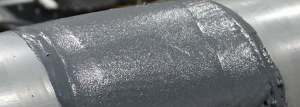
DESCRIPTION AND RECOMMENDED USES: 100% solids, Dura-Coat Rebuild Chemical Fast 251 is a solvent free, high functionality novolac epoxy coating with a fast-curing agent. It is designed particularly as a rebuilding material for metals in highly aggressive chemical and temperature immersion service. Dura-Coat Rebuild Chemical Fast 251 is convenient-to-use, non-sagging with excellent high-temperature resistant and high mechanical strength. It is able to withstand up to 230°C continuous operation and up to 280°C intermittently.
| Maximum Temperature (Dependent on service) | Wet Service | Dry Service | 230°C | 280°C | 446°F | 536°F |
|---|---|---|---|
| Chemical Resistance | Water | Alkalis | Inorganic Acids | Organic Acids | Organic Solvents | Excellent | Excellent | Excellent | Excellent | Excellent | |
| Solids by Volume | 100% | ||
| Viscosity | Paste | ||
| Mixed Density | 1.8 | ||
| Shore D Durometer Hardness | (ASTM D 2240) | 85 | |
| Pot life | 25 MIN / KG at 72ºF | ||
| Vertical SAG Resistance at 21ºC (70ºF) and 12mm (1/2”) | No sag | ||
| Coverage for 10Kg kit | 60sf @40mils | 5.6m²@1mm | |
| Mix Ratio | 2:1 by weight | Base: Activator | |
| Color | Grey as standard. Blue and Red optional. Other colors contact the manufacturer | ||
| Shelf life (unopened containers) | 3 years at 55-95ºF (13-35ºC) | ||
Surface Preparation
Proper surface preparation is critical to the long-term performance of this product. The exact requirements for surface preparation vary with the severity of the application, expected service life, and the initial substrate conditions. Minimum preparation is mechanical preparation St2/St3. Optimum preparation will provide a surface thoroughly cleaned of all contaminants and roughened to an angular profile between 75-125 μm (3-5 mil). This is normally achieved by initial cleaning and degreasing and then abrasive blasting to a cleanliness of Near White Metal (Sa.21/2), followed by removal of residual abrasive blast residues from the surface to be coated.
Mixing
Thoroughly mix Activator into Base with mixing stick or drill with low-speed mixing blade scraping sides and bottom of container or mixing board. Mix by weight 2-parts Base to 1-part Activator. Mix thoroughly to produce an even colored and streak-free material. THINNING: Never thin.
Application
Use heavy plastic squeegee or putty knife. Work material into profile of substrate to achieve maximum adhesion and to remove any entrapped air. Contour to correct form with putty knife or plastic applicator. If mold or form is used, coat its surface with a release agent to prevent adhesion of the material. Machining is possible using carbide tipped tools. Grinding is possible if done within 14 hours of application at 77ºF, 25ºC (add 1-1/2 hour for each 10ºF below 77º, subtract 1 hour for each 10º above 77ºF). Large holes and cracks can be bridged with glass or metal cloth.
Application Temperature: Keep between 55 to 95ºF (17 to 35ºC). Substrate: keep between 45 to 105ºF (7 to 40ºC). the difference in temperature of the substrate and the material should never exceed 10ºF, 5ºC. Substrate shall be a minimum of 5ºF (3ºC) above dew point. Do not apply if relative humidity exceeds 90%. If necessary, heat the metal prior to surface preparation using electric heater or heat lamp. Never use gas, oil, or kerosene heaters as they will leave a greasy residue on metal surface. For best results keep all material in warm area overnight (75ºF+) for ease of mixing.
| 16°C (60°F) | 25°C (77°F) | 32°C (90°F) | |
|---|---|---|---|
| Tack Free | 45 mins. | 30 mins. | 20 mins. |
| Light Load | 1 hour | 45 mins. | 30 mins. |
| Overcoat End | 1 hour | 45 mins. | 30 mins. |
| Full Load | 1.5 hours | 1 hour | 45 mins. |
| Full Chemical | 4 hours | 3 hours | 2 hours |
Clean Up
Tools must be immediately cleaned after usage by using industrial alkaline detergent.
Safety
Before using any products, review the appropriate Safety Data Sheet (SDS) or Safety Sheet for your area. Follow standard confined space entry and work procedures, if appropriate.